How to manage cash flow in machining
Cash flow is one of the biggest challenges in machining. Material must be purchased upfront, production takes time and customers may not pay for weeks. The key is to shrink the gap between buying material and converting that material into cash. Strong working capital management, faster production flow and the use of AI tools such as CloudNC’s CAM Assist can make that possible.
- Strengthen working capital
Working capital management underpins all cash flow. When materials, receivables and payables are kept in balance, the whole operation becomes smoother. Equally, even profitable businesses can go bust due to poor working capital management.
- Make material spending predictable
Materials often tie up a large share of cash. Align purchasing with the job pipeline so you are buying only what is needed. Accurate forecasting and close communication with suppliers help avoid overstocking or last minute emergency orders. Ensuring you don’t over order, along with minimizing scrap, are also key.
- Keep inventory accurate
Reliable inventory data supports smarter decisions and prevents unnecessary purchases. Regular stock checks and basic digital tracking create a foundation for better planning.
Also, never overproduce to avoid tying cash up in inventory that may become obsolete - it’s a false economy.
- Improve receivables
Faster invoicing, clear documentation and steady follow ups reduce the time between shipment and payment. Simple changes in invoicing discipline often have an immediate impact on cash flow.
On customers themselves, ensure you credit check them up front with a tool like Credit Safe so you know they pay on time. You can also add late fees to receivable terms to ensure you have leverage to collect promptly.
- Negotiate aligned payables
When possible, work with suppliers to agree terms that reflect your production cycle. This spreads outgoing cash more evenly and eases pressure on the business. Material suppliers offer up to 90 days with the right negotiation, and tooling vending machines allow you to have access to tooling with no lead time.
- Shorten lead times
Every hour removed from a job’s lead time helps bring cash in sooner. Lead time improvements often come from operational refinements rather than major investments.
Consistent fast programming with good right-first-time hit rates is the key here. Having to go back round the process due to an initial fail kills lead times, and every day lost is a day extra without receviables.
- Improve scheduling
Clear visibility of machine capacity and job priorities helps jobs move more consistently through the factory. Better flow means earlier delivery and earlier invoicing.
- Reduce setup time
Standardised tooling, organised fixtures and fewer program revisions reduce delays before machining begins. Small gains add up across many jobs. (Tools like our free Soft Jaw Designer can help!)
- Deliver predictably
Customers value accurate delivery dates and will return with more work when they trust your capability. A stable pipeline supports stronger cash planning.
- Use AI to speed up programming
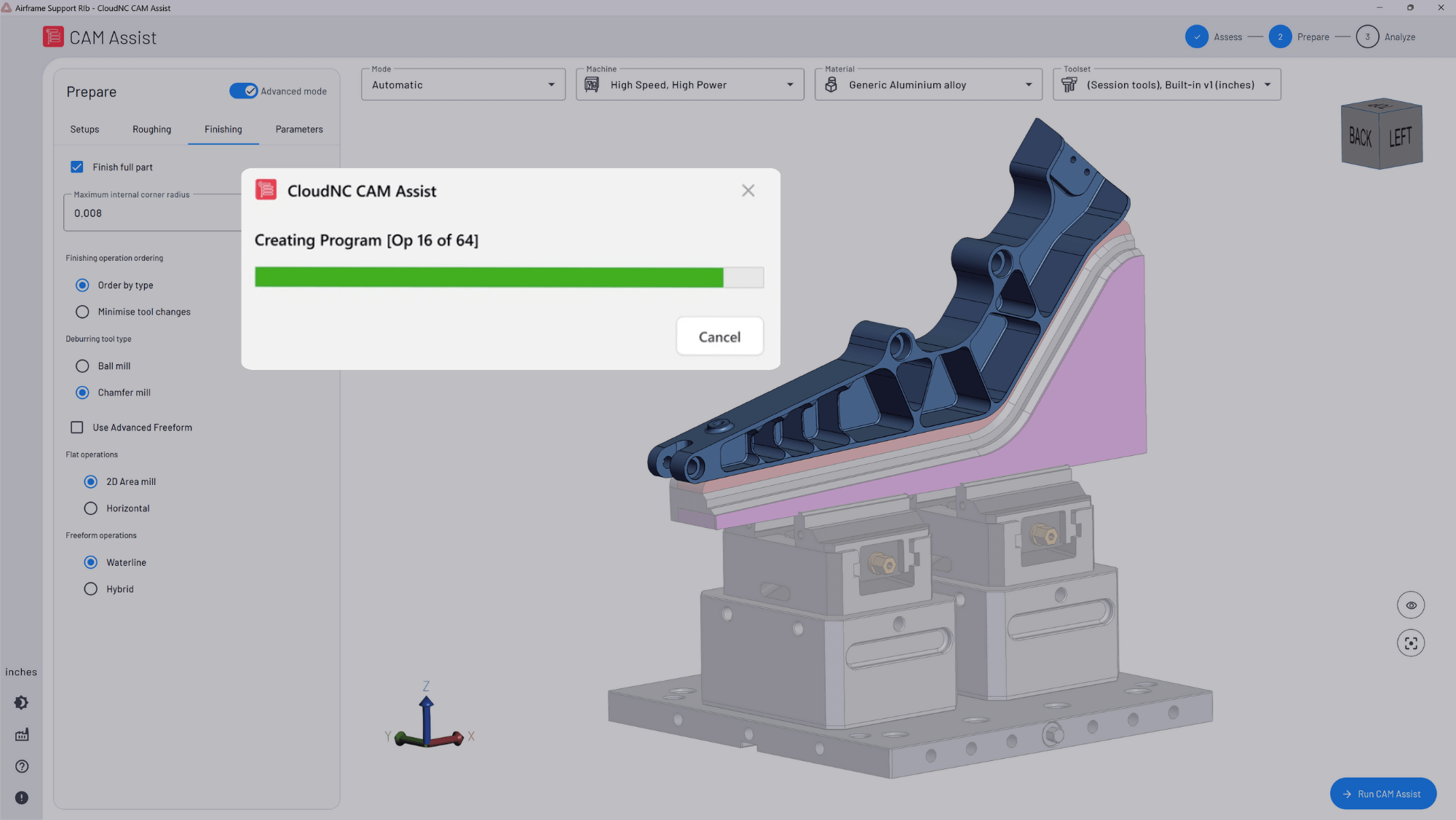
Programming is one of the earliest stages in the manufacturing process and delays here often set the pace for the whole job. AI tools such as CloudNC’s CAM Assist allow programmers to generate high quality toolpaths for 3-axis and 3+2 axis prismatic parts much faster.
By reducing programming time, CAM Assist helps machining teams move more quickly from CAD to cutting, shortening the material to cash cycle.
- Build repeatable processes
Repeatable processes support consistent lead times, reliable costs and better forecasting. Clear CNC quoting guidelines, standardised workholding and structured job reviews create a stable foundation for decision making.
- Improve visibility across the shop floor
Real time insight into machine utilisation, job progress and work in progress helps teams identify bottlenecks before they slow production. Lower WIP means less cash tied up in unfinished parts, and better visibility supports more confident planning.
The path to healthier machining cash flow
Learning how to manage cash flow in machining requires a mix of operational discipline and smart technology choices. Strong working capital control, shorter lead times, improved visibility and AI enabled programming with CAM Assist all help machining companies convert their material investment into revenue more quickly and reliably.
-33-LO-RES.jpg)