Every few years, machining gets handed a familiar storyline: this time we’re going to automate the “hard bit” away. The pitch is usually the same - press a button, get a toolpath, ship parts… and the humans are optional, or even completely absent.
It’s a seductive idea. It’s also dead wrong.
At CloudNC, we don’t set out to automate CAM programming. We set out to accelerate it. That might sound like semantics, but it’s not. It’s a foundational belief about where value is created in machining - and who creates it.
CAM programming isn’t clerical work
There’s a misconception that CAM programming is just translating geometry into G-code. If that were true, full automation would be a straightforward software problem.
But real CAM programming is decision-making under constraints:
- What matters most: cycle time, surface finish, tool life, risk?
- What’s the best strategy for this setup, this fixture, this machine, this shop’s tooling ecosystem?
- Where are the hidden traps in the model - thin walls, awkward blends, impossible radii, stock conditions that don’t match the CAD?
- How do you keep the process stable when the material batch changes, or there are last minute changes, or even when the machine itself just isn’t having its best day?
Those decisions aren’t just “preferences.” They’re the difference between predictable throughput and a scrap bin full of expensive mistakes. And they are all where a CAM programmer’s expertise shines.
A strong CAM programmer doesn’t just convert a CAD model into a toolpath - although of course they do do that. But they’re also a manufacturing engineer, a risk manager, and a problem-solver.
So when people ask, “Why don’t you automate CAM programming?” my answer is: because we’re not trying to erase the valuable thinking in the process. We’re seeking to amplify it.
Automation is about removal. Acceleration is about amplification.
When someone says “automate CAM,” what they often mean is: remove the human from the loop.
That’s not our goal.
Our goal is to take the repetitive, time-consuming parts of programming - the parts that drain capacity - and give programmers leverage. We want them spending more time on what they’re uniquely good at:
- choosing strategies
- validating intent
- improving machineability
- standardising best practice
- reducing risk
- pushing the envelope on difficult parts
In other words: we amplify the programmer.
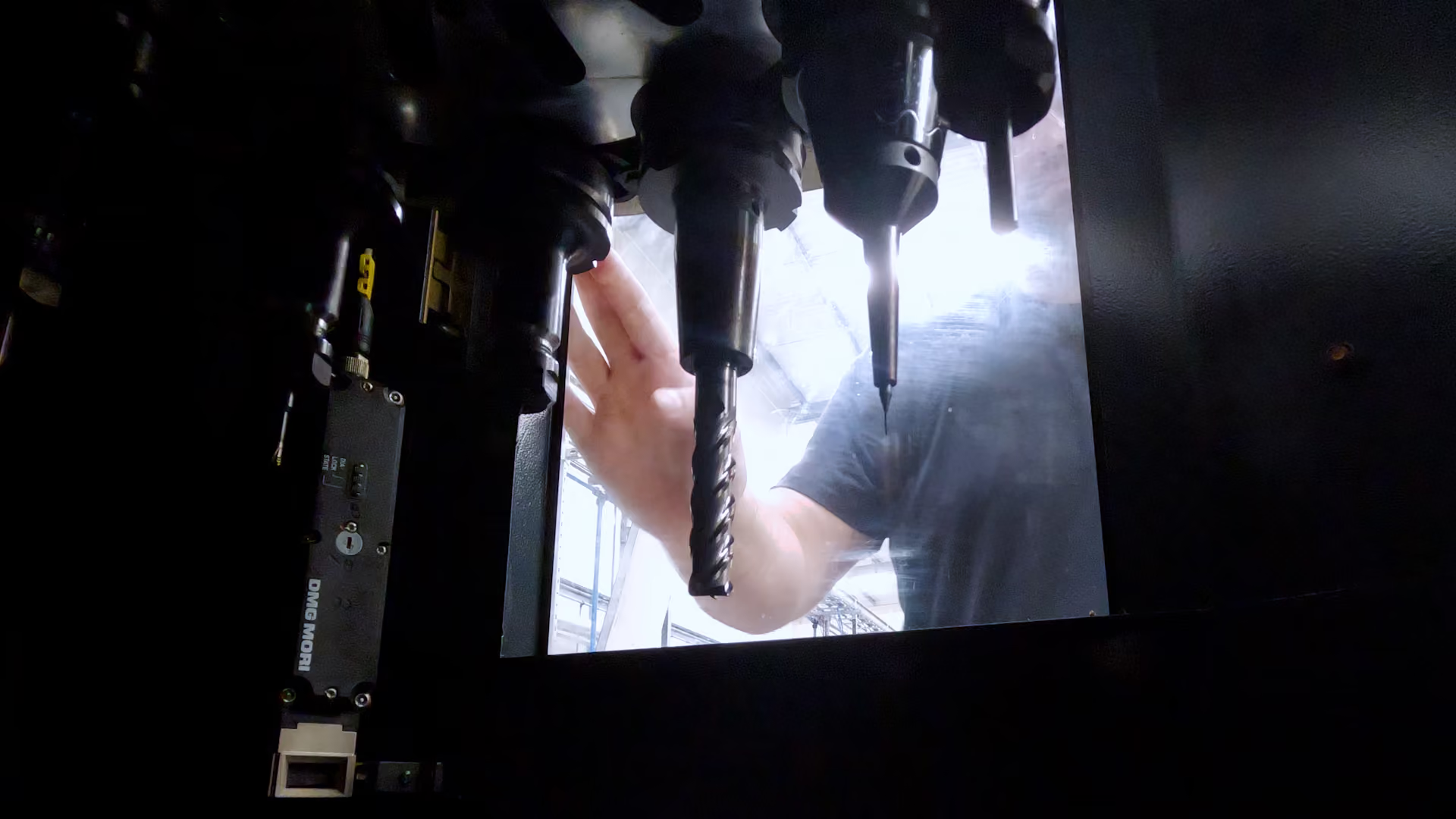
The best analogy I can give is this: CloudNC is not trying to be a “replacement programmer.” Instead, we’re trying to give you - the skilled programmer - access to extra help who can set things up for you while you’re working on other jobs. In fact, this is how many of our customers say they use us already, for example in this video:
“Lights out” is not the same as “hands off”
There’s a difference between running machines unattended and running engineering unattended.
Most shops already know this. You can have automation on the shop floor - pallet pools, probing cycles, tool monitoring - while still relying on skilled humans to make smart upstream decisions.
CAM sits upstream of everything. If you get it wrong, you don’t get a gentle warning. You get collisions, scrap, missed delivery dates, and the sort of chaos that doesn’t show up in a demo.
So yes: we believe in automation where it makes sense. We just don’t believe the right end state for CAM is “humans optional.”
The right end-state is humans empowered.
A great CAM programmer navigates messy reality with judgement. Our software is designed to support that judgement with speed and consistency - not to pretend judgement is unnecessary.
The real bottleneck isn’t toolpath generation. It’s capacity.
There’s a practical reason this matters: CAM capacity is a chronic bottleneck.
Shops aren’t short of parts to make. They’re short of time, people, and mental bandwidth. The cost of programming isn’t just the minutes at a desk - it’s the queue it creates, the uncertainty it introduces, and the strain it puts on your best people.
Acceleration changes that equation.
When programming becomes faster and more reliable, a programmer can:
- respond to quotes faster
- explore more options
- support more machines
- absorb more work without burning out
- improve standardisation and documentation
- focus on the tricky jobs that actually need them
That’s not a nice-to-have. That’s competitiveness.
We’re not here to deskill manufacturing
There’s also a cultural point here that I feel strongly about.
Machining (and manufacturing more broadly) is one of the most important - and least appreciated - pillars of modern economies. It deserves better than a narrative that says its experts are just temporary placeholders until software “solves” them.
If anything, the industry needs the opposite: more respect for skill, more investment in capability, and tools that make expertise go further.
CloudNC is built on the belief that the future of machining is not fewer skilled people - it’s skilled people with better tools.
What CloudNC actually does
So if we’re not automating CAM programming, what are we doing?
We’re building software that helps CAM teams move faster while staying in control.
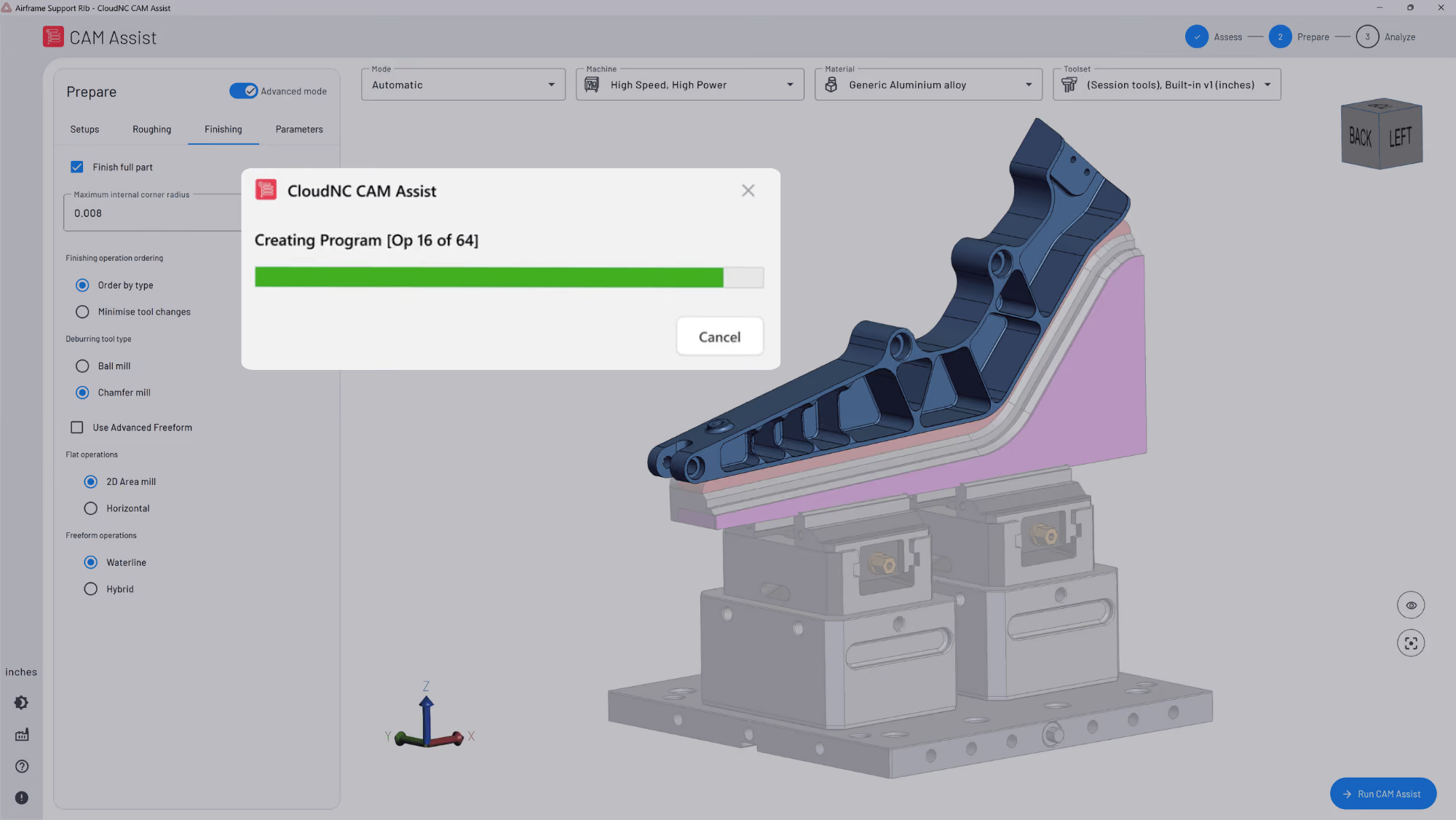
CloudNC can generate machining plans and toolpaths quickly and consistently - capturing best practice and applying it repeatedly - so programmers don’t have to start from scratch every time.
Used well, it feels like adding a highly capable teammate to your CAM team: someone who can take the first pass instantly, handle the routine work, and give you a strong baseline - while your experts guide the decisions, validate outputs, and refine where it matters.
That’s the point: speed without surrendering control.
The future isn’t “no programmers.” It’s “programmers with superpowers.”
There’s a version of this story where CAM programmers disappear.
It makes for punchy headlines. It also misunderstands where quality, safety, and innovation come from.
The real future - the one that will win - is the one where programmers become a force multiplier. Where a single expert can support more machines, more parts, more complexity, with less stress and more confidence.
That’s acceleration.
And that’s why we don’t automate CAM programming.
We accelerate it - because the programmer is not the problem to be solved. They’re the advantage to be scaled.


%201.avif)