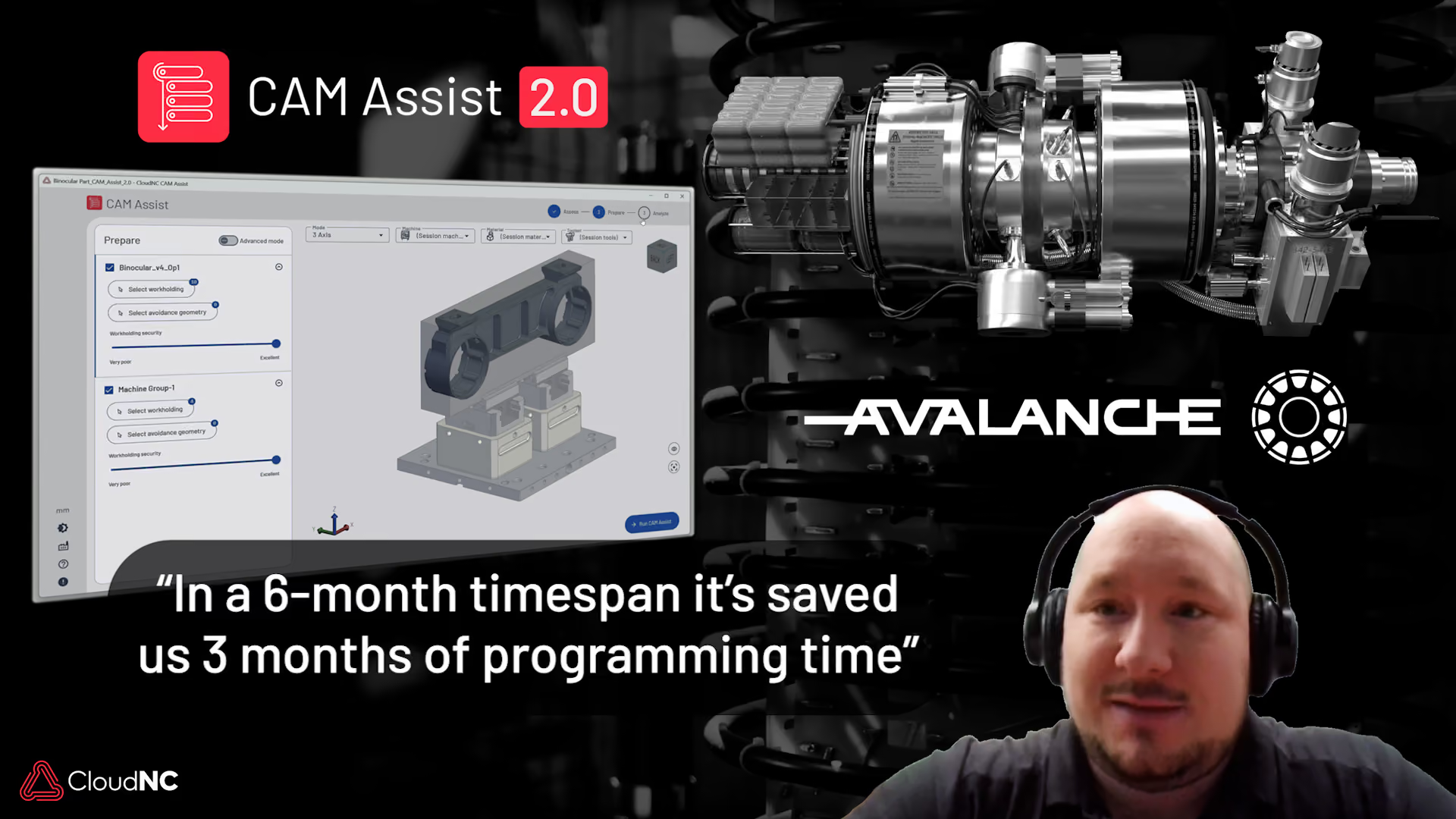
Anthony Stephenson from Avalanche Energy, a nuclear fusion startup in Washington State, shares how he is benefitting from CAM Assist.
- What does Avalanche Energy do?
We are developing a tabletop nuclear fusion reactor. We do lots of one-off, high-mix parts - everything from really weird high-entropy alloys, to lots of ceramics, to complicated parts that we run through CAM Assist.
- What’s the goal of a tabletop fusion reactor - what’s it for?
It has a lot of applications. For defense, you can power ships, submersibles, and drones, and it’s relatively small. You can stack them together like batteries - if you need more power, you start plugging them into each other. If you needed energy in Antarctica, that’s the way to go. When I say tabletop, it’s tabletop, and it’s relatively small compared to every other fusion reactor - they’re monstrous.
- What does manufacturing look like when you’re building something no one’s built before?
Every day is something different, and a lot of times it’s constantly one-off parts. In the past six months, I’ve done like 860 different parts… and we have to do it really fast.
- Before CAM Assist, how were you programming parts?
We’d get in, there’d be new parts in the queue, we’d get our blueprints, check if we have material, and start programming. Some parts we can program pretty quick, but some of them are feature-rich, with hundreds of features. I’d get a good amount of the roughing done in like four hours - half my day is gone programming.
- What difference does CAM Assist make day-to-day?
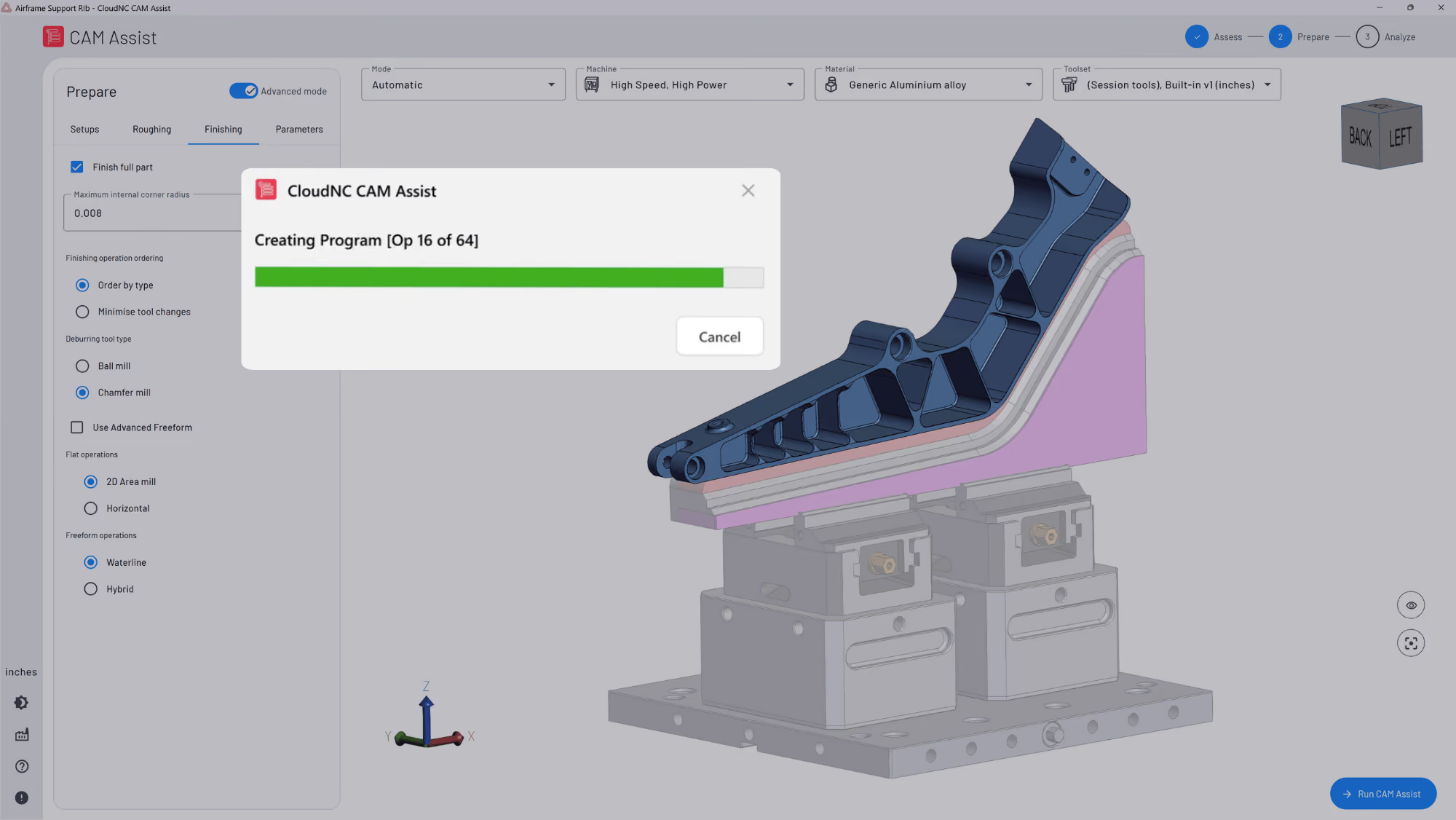
It makes it so I can do parts same-day sometimes. Something that would take me hours to program, I can do in minutes. I can click a button and five minutes later I have like 75-80% of the program. On some parts, it’s done - one and done - and then I can move on to something else.
- If you had to sum up the impact in one line, what is it?
The biggest impact is iteration speed. In a startup environment, being able to iterate quickly is everything. CAM Assist lets us move faster, test faster and improve faster.
- Can you put any numbers on the impact?
In a six-month time span, we’re cutting like three months off of machining time - off of programming time - every year, at least at a minimum. We haven’t tracked the numbers exactly, but it’s crazy how much of an impact it has.
- How does CAM Assist affect hiring and staffing?
It is so hard for us to find programmers and machinists, so we hire somebody green with no experience and teach them everything. Then we give them a seat of CAM Assist and say, ‘Hey, this is how you run it.’ It turns that green guy into a seasoned machinist or seasoned programmer - enough that he can get something cooking.
- Does this replace skilled machinists and programmers?
It’s essentially impossible for us to find skilled programmers and machinists, and this gives us a path forward. You still need a skilled machinist, but it makes the workload a lot wider - one person can take on more stuff. It’s like having a teammate you can tag in when you’re getting tired, and they can take the load for you.
- How has it affected stress levels and deadlines?
Prior to CAM Assist, the stress level was pretty high. We had really tight deadlines - they expect stuff next day or same day sometimes. Now that expectation is much easier to hit, and the stress level is way lower.
- Have you used the CAM Assist 2.0 update?
Yeah - it’s way cleaner and way crisper, and it definitely seems faster, too. The flow is a lot better. From an ease-of-use standpoint, it’s pretty straightforward.
- How will you use CAM Assist as you scale?
As we grow and have more build campaigns, we’ll add to our team, and we’ll have more seats - more CAM Assist seats. It helps us improve quality, and it’s really consistent with programming. Not everybody does things the same with multiple programmers, but this sets a standard process.
- What do you think the impact will be on manufacturing?
Tools like CAM Assist are going to become a standard in manufacturing. Shops that adopt this technology will have a major competitive advantage in speed, efficiency, and scalability. Shops that don’t adopt this kind of tool will eventually disappear. There’s no way to compete with a shop that does have it.
- When did you adopt CAM Assist, and what convinced you?
We got our seat in September 2024, right after IMTS. I was totally skeptical, and I was like, ‘There’s no way somebody can apply this to CAM software - it’s too complicated.’ Then we had our meeting, and I was totally blown away. It was the total opposite. It’s like having a programmer sitting next to you that knows how to do everything.
- What would you tell other machine shops?
In the startup world, you can’t not have a tool like this. It’s like when CAM software first came out in the ’80s and ’90s - shops that refused to adopt it aren’t around anymore. If you don’t have a tool like this, you will not succeed - flat out.
[This interview has been condensed and edited for clarity]