Good CNC machinists are still hard to find.
In 2026, many machine shops have enough demand, machines and ambition to grow. The limiting factor is often people. Not just operators, but the experienced machinists, setup specialists and CAM programmers who can get difficult work running safely and profitably.
The problem shows up in familiar ways. Machines wait for programs, senior machinists get pulled into every awkward setup, and quoting slows down because only one person knows how a job should be made. Promising operators cannot move up quickly enough.
There is no single fix. Better pay helps. So does better hiring and training, as well as giving skilled people better tools and clearer processes. The shops that make progress will deal with the shortage as an operating challenge, not just a recruitment one.
What the 2026 data says
The numbers back up what shop owners already feel. In March 2026, BLS reported 462,000 manufacturing job openings, while its longer-term outlook projects around 34,200 openings a year for machinists and tool and die makers from 2024 to 2034.
That does not mean every shop is growing headcount. It means replacement demand is a constant issue. When an experienced machinist leaves, the shop loses judgement, setup knowledge, customer history and troubleshooting ability, as well as labor hours.
For shop owners, the practical takeaway is simple: do not wait for the labor market to fix the problem for you. Build more capacity from the team you already have, while improving how you hire and train the next one.
Find the real bottleneck
Before posting another job advert, look at the last 20 parts that caused problems.
Where did they slow down? Was the machine unavailable, or was it waiting for a program? Did the setup sheet have enough detail? Did a junior employee stop because they lacked confidence or documentation? Did the same senior person have to answer every question?
This usually gives a clearer answer than “we need more machinists.”
You may find that the real problem is CAM programming capacity, setup knowledge, poor handovers, or too much tribal knowledge sitting with one or two people. Once the bottleneck is specific, the response becomes more useful.
Write job adverts that explain the actual work
Many CNC job adverts are too vague. They ask for a “CNC machinist” but do not explain what the person will actually do.
A stronger advert should include the machines, controls, materials, type of work, tolerance expectations, shift pattern, training path and whether CAM programming is part of the role. CloudNC’s guide on how to hire good machinists also recommends being specific about machines, controls, CAM packages and materials.
Instead of writing:
“CNC machinist wanted. Must have experience. Competitive pay.”
Write something closer to:
“You will set up and run 3-axis and 5-axis CNC mills producing low-volume precision parts in aluminium, stainless steel and titanium. You will work from existing CAM programs, use probing, inspect parts with manual gauges and CMM reports, and progress through a documented skills matrix.”
That kind of detail helps good candidates understand the role. It also filters out poor fits earlier.
Stop looking for one person who can do everything
The perfect hire can program, set up, run, inspect, quote, train juniors and rescue difficult jobs. People like that exist, but they are rare and usually already employed.
A more realistic approach is to split the work into skill level:.
- Operators can run proven jobs and check parts
- Setup machinists can prepare jobs, prove out programs and solve normal production issues
- CAM programmers can create toolpaths, setup sheets and machining strategies
- Senior machinists can review methods, mentor others and handle the most difficult work
That structure makes hiring easier because every role does not need to be a unicorn role. It also gives current employees a visible path forward.
Use a simple skills matrix to track progress. Include the things that matter in your shop, such as drawing reading, GD&T, tool setting, probing, inspection, workholding, prove-out, CAM familiarity and troubleshooting.
Build a training path before you urgently need it
Training takes time, but relying only on experienced hires is risky.
Start small. Create one entry-level role that can succeed with proper support. Pair that person with a named mentor. Give them a weekly review. Document the setups they need to learn. Build a route from operator to setup machinist, then from setup machinist into more advanced work.
The important part is structure. “Watch and learn” is not enough. New people need clear tasks, examples of good work and regular feedback.
Apprenticeships, local colleges and technical programs can help, but the shop still needs a process internally. If the knowledge stays in people’s heads, every new hire has to learn the hard way.
Keep the experts you already have
Retention is often the fastest hiring win.
Your best machinists and programmers probably carry a lot of the shop’s hidden knowledge. They know which jobs are risky, which tools work, which customers need extra care and which setups need caution.
If those people spend every day being interrupted, fixing repeat problems and rescuing late jobs, they will burn out.
Reduce that pressure by improving documentation, cleaning up handovers and giving senior people time to train others properly. Give them ownership of standards, tooling strategy, process improvement or mentoring. Skilled people are more likely to stay in a shop where problems get fixed instead of repeated.
Use technology where skilled time is stretched
For some shops, the biggest constraint is CAM programming capacity. Jobs are won, machines are available, but programs and setup information become the queue.
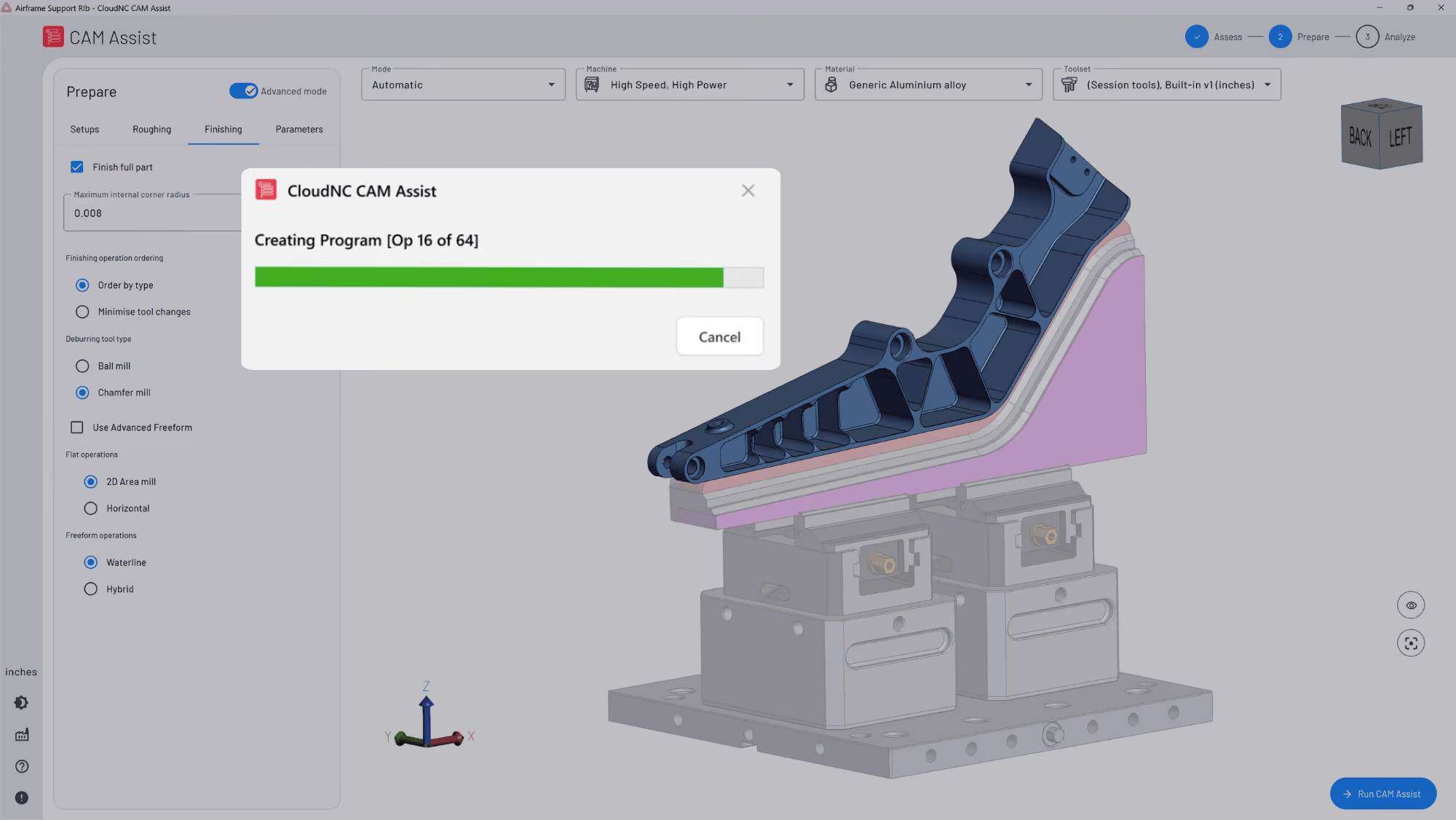
That is where tools such as CAM Assist can help. CAM Assist supports programmers by generating machining strategies and toolpaths inside existing CAM workflows, helping teams reduce repetitive CAM work and get to a usable starting point faster.
The important point is not to make software the centre of the business. It is to help skilled people spend more time reviewing, improving and applying judgement, rather than starting every program from a blank screen.
For a deeper look at the AI side of the shortage, CloudNC’s existing article on the AI approach to the CNC machinist shortage in 2026 covers that angle in more detail.
A simple 30/60/90-day plan
First 30 days: identify the constraint
Review recent late jobs, quoting delays and programming queues. Find where work actually slowed down. Rewrite job adverts so candidates understand the machines, materials, controls, tolerances, shift pattern and progression route.
Create a basic skills matrix for the current team. Look for hidden capacity, training gaps and single points of failure.
Days 31 to 60: improve the system
Create better setup documentation for repeat jobs. Move appropriate tasks from senior people to trained operators or setup machinists. Add a practical test to the hiring process so candidates can show how they think.
Start conversations with local colleges, apprenticeship partners or workforce groups. If CAM programming is a bottleneck, test whether AI-assisted CAM can reduce repetitive programming work on real parts.
Days 61 to 90: make the changes stick
Update job descriptions around skill levels. Give senior machinists defined mentoring or review responsibilities. Make setup sheets and tool libraries part of the normal workflow.
Then measure what changed. Look at programming time, machine waiting time, senior interruptions, quote turnaround and how many jobs junior or mid-level staff can now support.
Small gains add up. A few hours saved each week. One operator moving toward setup. One repeat job documented properly. One better candidate conversation. That is how capacity starts to come back.
What shop owners should do next
The machinist shortage will not be solved by job adverts alone.
Shops need clearer roles, better training, stronger retention and less dependence on a handful of experts. They also need to look carefully at where skilled time is being consumed by repeat work that could be documented, simplified or supported with better tools.
Start with three questions:
- Where is work slowing down today?
- Which skills are trapped in one or two people?
- What would let the current team get more good work onto machines?
Answer those honestly and the hiring plan becomes much clearer.
For shops where CAM programming is part of the constraint, CAM Assist is one way to help the current team move faster. The bigger goal is a shop that hires better, trains more deliberately and gives skilled people more leverage.