Most factories have a good feel for the obvious bottlenecks. A machine is booked out for the week. Material has not arrived, inspection is backed up, or a fixture needs reworking before production can start.
Quoting is easier to overlook, because it happens earlier in the process. Yet for many manufacturers, the RFQ queue is where work first starts to slow down.
A customer sends a drawing, a CAD file, material requirements, quantities, tolerances and a delivery target. The factory then has to decide whether the job fits its capabilities, what it will cost, how long it will take and what margin is sensible. The customer wants a fast answer, while the factory needs a price that will still make sense once the job reaches the shop floor.
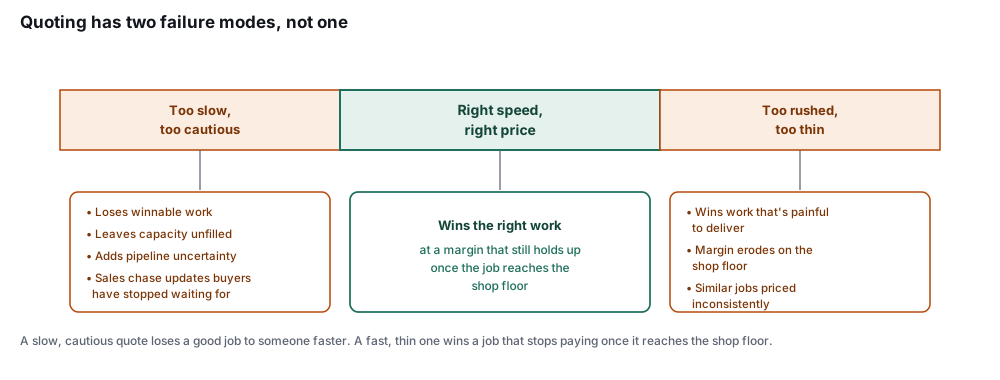
That tension is what makes quoting such a common bottleneck. A slow quote can lose a good job, but a rushed quote can win the wrong one. Either way, the quoting process has a direct effect on revenue, margin and capacity.
For manufacturers trying to win more of the right work, quoting is one of the most useful places to start.
Why quoting slows factories down
Manufacturing quotes carry a lot of technical judgement.
For a CNC machining RFQ, an estimator may need to assess:
- geometry
- setups
- workholding
- tooling
- tolerances
- material
- inspection
- finishing
- lead time
- commercial risk
In addition, a part that looks simple on a screen can become expensive if it needs an awkward setup, a hard-to-source material or a tolerance that changes the inspection plan.
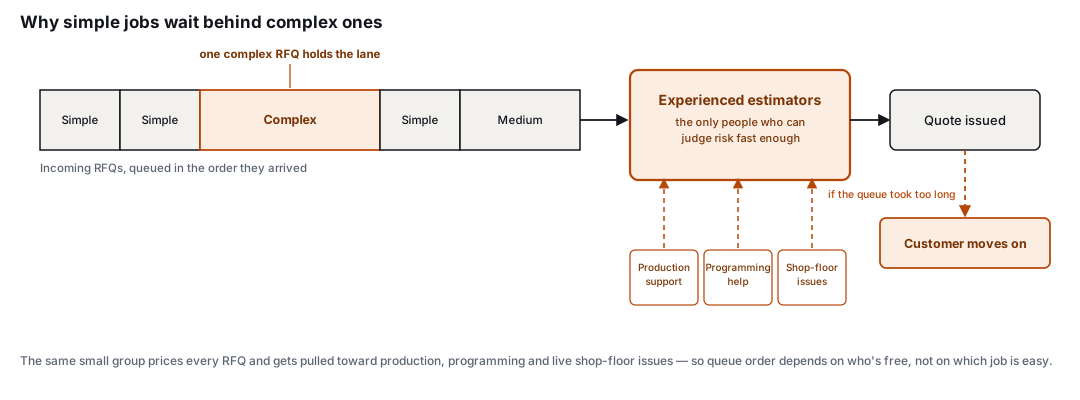
That is why quoting often depends on the most experienced people in the business. They can spot risk quickly, remember similar jobs and understand which parts are a good fit for the shop. The challenge is that those same people are usually needed elsewhere, supporting production, solving customer questions, helping with programming or dealing with live shop-floor issues.
When every RFQ needs input from a small group of experts, the queue builds up. Simple jobs wait behind complex ones; sales teams chase updates… and buyers lose patience. By the time a quote is ready, the work may already have gone somewhere else.
NIST describes bottleneck improvement as one way manufacturers can reduce critical path lead time across supply chains. Quoting belongs in that conversation because no job can move into planning, scheduling or production until the commercial and technical assumptions are clear.
What slow quoting costs
The cost of slow quoting is often quiet. There may be no obvious failure, just fewer replies, fewer wins and more uncertainty in the pipeline.
A late RFQ response can reduce win rates, leave machine capacity unfilled and create more pressure on sales teams. Inconsistent quoting can also create problems later, especially if similar jobs are priced differently or if the assumptions behind a quote are not clear when production begins.
There is also a margin risk. If an estimator prices cautiously because there is not enough time to investigate the job properly, the factory may lose work it could have won. If the quote is rushed in the other direction, the factory may win revenue that becomes painful to deliver.
Quoting quality affects the whole factory. It shapes what work comes in, how profitable that work is and how smoothly it transfers from sales into production.
Why spreadsheets start to creak
Spreadsheets are common in manufacturing quoting for good reasons. They are flexible, familiar and quick to adapt. Many shops have built quoting processes around them because they work well enough at a certain scale.
The problems usually appear as RFQ volume grows:
- Different estimators may use different versions of the same sheet
- Material prices can go stale
- Assumptions get buried in formulas
- Historical quotes are hard to compare with actual job performance
- Similar jobs may be priced differently, in part because the logic lives partly in a spreadsheet and partly in someone’s head
Spreadsheets also cannot properly understand the part itself. They do not read geometry, assess setup difficulty, compare features with previous work or flag machining risk without significant manual input.
That is why more manufacturers are looking at manufacturing estimating software, CNC quoting software and AI quoting software. The aim is to make quoting faster, more consistent and easier to review, while keeping experienced people in control of the final decision.
Where AI quoting software can help
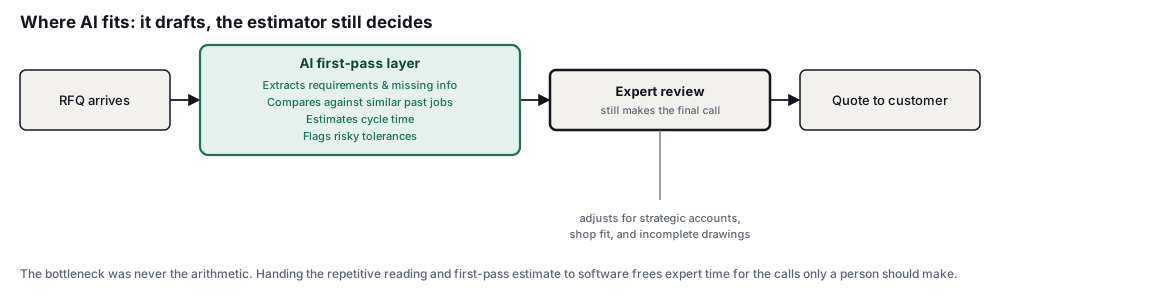
AI quoting software is most useful when it reduces the repetitive work around estimating. That can include:
- reading RFQ information
- extracting key requirements
- comparing a new part with similar historical jobs
- estimating cycle time
- highlighting missing information
- flagging risky tolerances
- preparing a first-pass quote for review
In CNC machining, this is particularly valuable because quoting depends on both geometry and process knowledge. A useful estimate needs to consider how the part might be made, how many setups are likely, how long machining could take and where the main risks sit.
A good AI quoting system should make those assumptions visible. Estimators need to understand where the numbers came from, what has been inferred and what still needs checking before a quote goes to the customer.
There will always be decisions that depend on context. A factory may price more aggressively for a strategic customer, avoid a job that does not suit its machines or add margin because the drawing is incomplete. The strongest tools support that judgement rather than trying to bury it.
Where CloudNC fits in
At CloudNC, we have already seen how much time can be saved when AI supports skilled manufacturing teams in practical workflows.
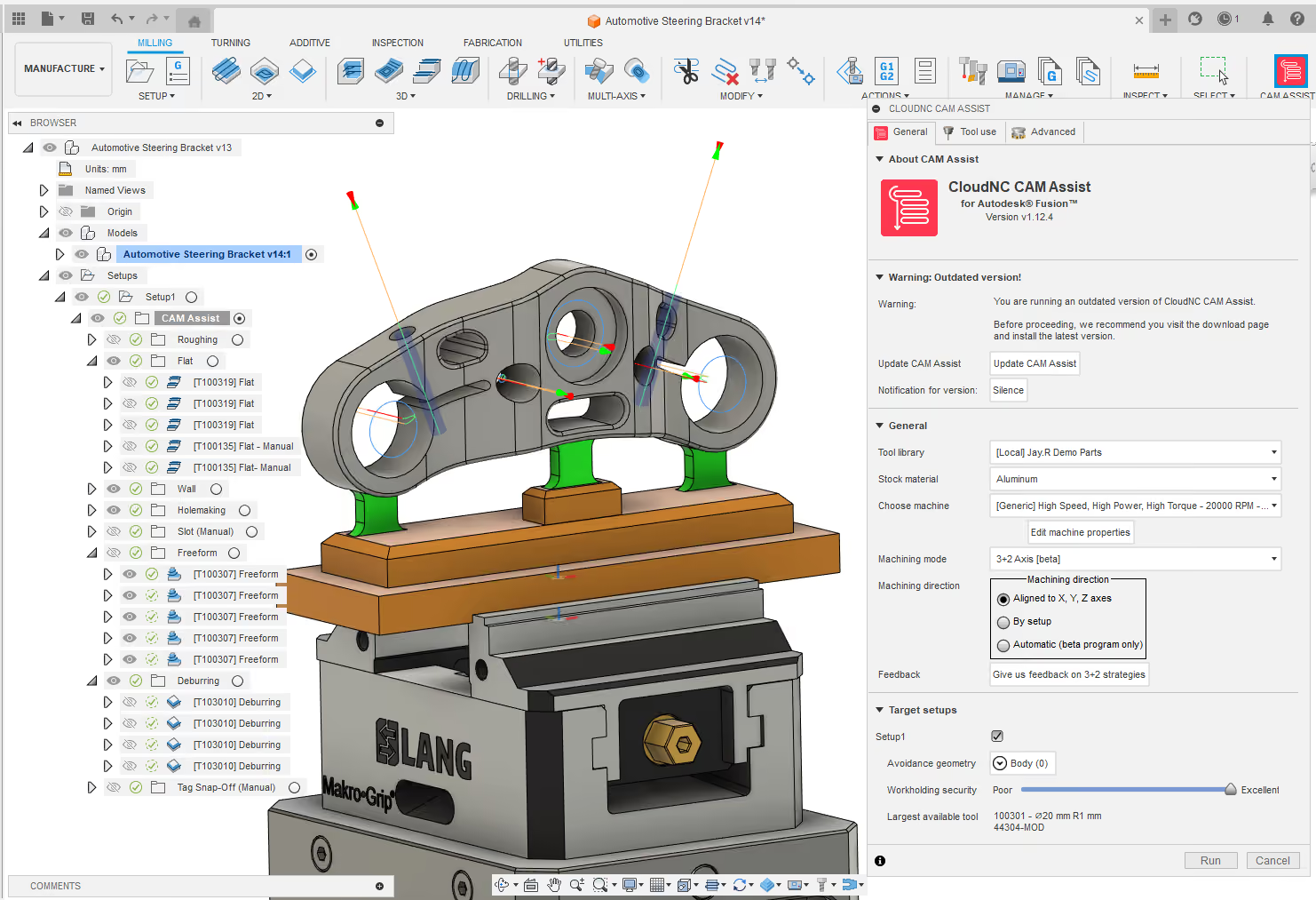
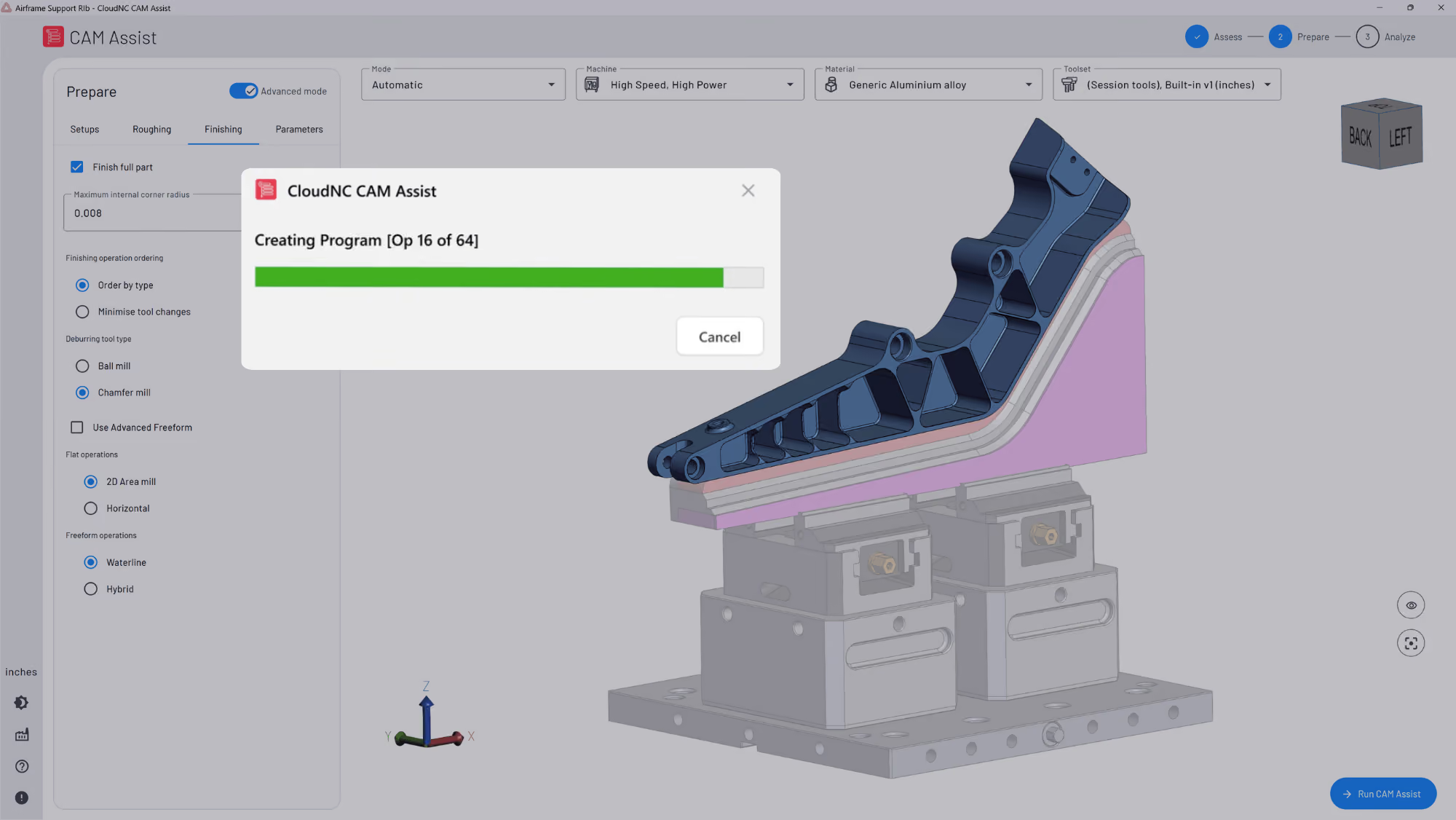
For example, CAM Assist Cycle Time Estimator helps machinists estimate how long new CNC work will take, supporting faster quoting workflows. We believe it can produce estimates for 3+2 axis parts up to 20 times faster, depending on part complexity.
In addition, AI-supported quoting is on the way! Watch out for more news on this later in 2026.
The bottom line
Quoting sits between customer demand and factory capacity. Every RFQ asks whether the shop can make the part, at the right price, by the right date, without creating problems later.
Answering that well takes data, experience and speed. Many factories already have the experience and the demand. The gap is often the process that turns RFQs into accurate quotes quickly enough.
Manufacturing quoting software, estimating software and AI quoting tools can help close that gap. For factories that want to win more of the right work, quoting is a smart place to focus.