Lowering tooling costs in CNC machining is one of the fastest ways to improve margins. Many shops treat tooling as a fixed expense, yet small changes in process planning, toolpath strategies and team consistency can make a major difference.
Why tooling costs increase
Tooling costs rise due to premature wear, inconsistent programming decisions, poor toolpath strategies and setups that create excess vibration or heat. When each programmer selects different tools for similar work, inventories grow and costs follow. Understanding these issues is the first step toward controlling them.
Choose appropriate and standard tooling
Consolidate tools used for common materials and geometries, but go beyond diameter and length by standardising coatings, substrates and toolholding methods where possible. For example, AlTiN- or TiAlN-coated carbide end mills perform well across a wide range of steels and cast irons, making them good candidates for standard tools in ferrous work. For aluminium, uncoated or ZrN-coated tools with polished flutes reduce built-up edge and extend tool life. Matching coatings to material groups avoids premature wear and makes performance more predictable.
Standardisation should also include toolholders. Using heat shrink holders for finishing or long-reach applications can significantly improve rigidity and runout compared to collet systems, reducing chatter and extending tool life. For roughing, robust side-lock or hydraulic holders may be sufficient and more cost-effective. Limiting the number of holder types simplifies setups and reduces the need to stock multiple redundant options.
By focusing on proven, versatile tool and holder combinations for each material family, shops can reduce inventory, simplify procurement and improve repeatability on the shop floor. Programmers benefit from familiar cutting performance, and operators see more consistent tool life, all of which helps control tooling spend.
Improve strategies to extend tool life
Techniques such as high efficiency roughing, consistent tool engagement and radial chip thinning reduce heat and load. These strategies help tools last longer and reduce breakages. Periodically reviewing approaches across the team ensures good habits stay consistent. CloudNC’s Cutting Parameters plug-in for its CAM Assist solution can also help - for example, it can calculate the flute helix angle and provide the optimal axial cutting depth to reduce chatter.
(Incidentally, we recently produced a video on the lfe of a carbide end-mill - it's here:)
Standardize coolant inspection
A lot of shops don't realize that coolant isn't just cooling like water, but it’s transferring the heat through a medium designed specifically for heat transference. Checking viscosity and brix levels consistently can help keep the coolant performing properly, with corresponding effects on tool wear. .
Support stable machining
Good workholding reduces chatter and protects tools. Review fixture setups, reduce tool stick out and ensure rigid part support. Stable machining conditions usually lead to longer tool life and lower replacement costs.
Reduce variability across programmers
A major contributor to high tooling spend is inconsistent decision making. Shared cutting data, preferred strategies and standard tooling libraries help the whole team work from the same foundation. Consistency keeps inventories lean and predictable.
How CAM Assist helps reduce tooling costs
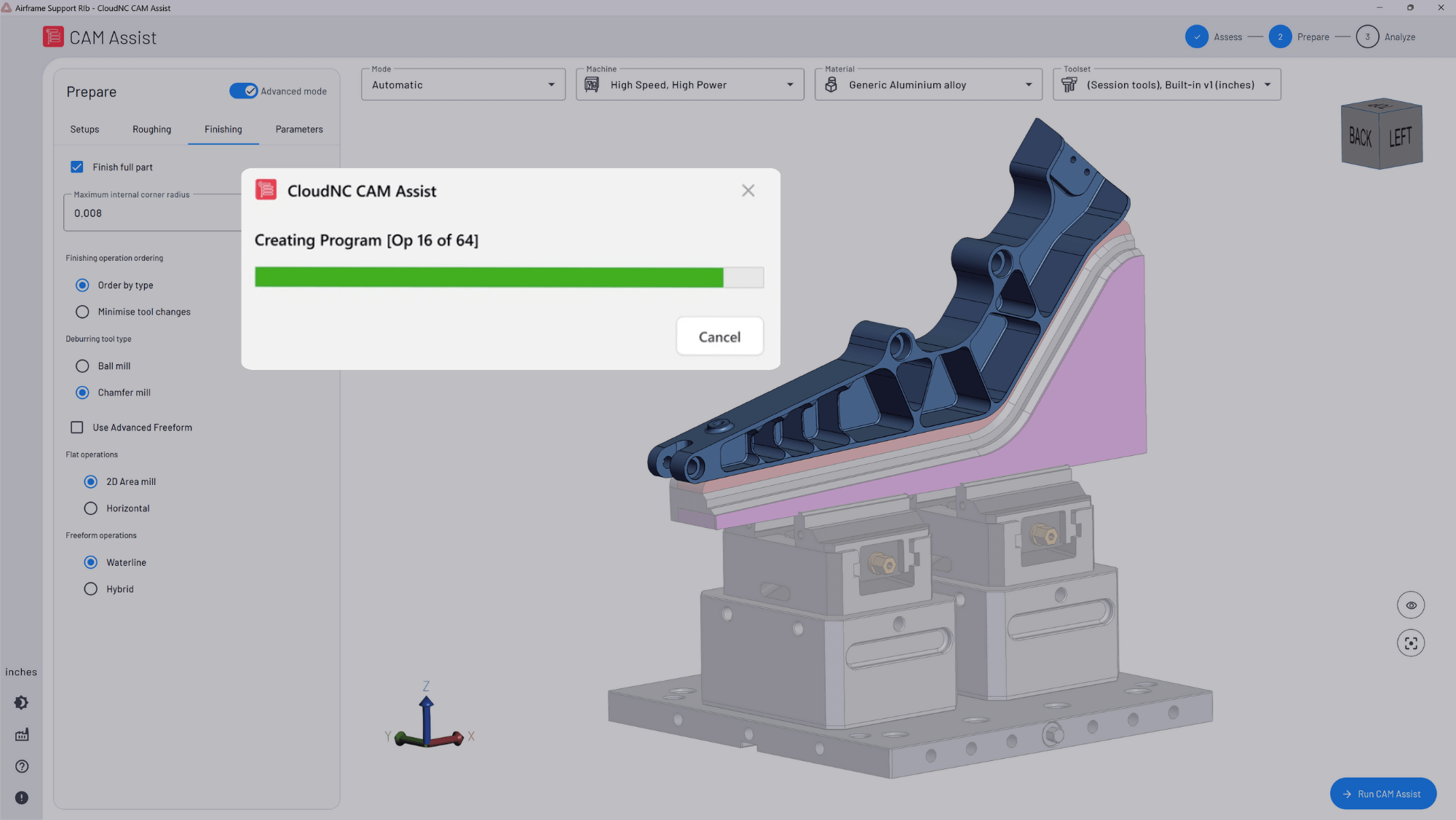
CAM Assist supports programmers by guiding machining strategy decisions and encouraging consistent, best practice-based approaches. When teams start from similar strategies, tool usage becomes more uniform and unnecessary tool purchases fall. CAM Assist can also surface strategies that lessen tool wear, improving both cost and cycle time.
Track tooling trends
Regularly review tool usage, failures and wear patterns. Insights from this data highlight where changes to strategies or setups could reduce spend. Cost control becomes easier when you can see what drives it.
Lower tooling costs for long-term advantage
Reducing tooling spend is not only a cost saving exercise. Shops that machine more consistently enjoy better predictability, improved quality and stronger competitiveness. By combining sound machining practice with AI support from CAM Assist, manufacturers can significantly cut tooling costs while maintaining speed and precision.