Starting your own machine shop is more than buying a machine and cutting metal. It is a chance to build a business that turns ideas into real, high-precision parts that power aircraft, medical devices, electric vehicles, next-generation technology, and even - maybe - go into space!
For many machinists and engineers, opening a CNC machine shop represents independence, craftsmanship, and the opportunity to compete on a global stage. With the right planning, equipment, and software, even a small shop can win complex, high-value work.
This guide walks through the practical steps required to start a CNC machine shop, from defining your niche and securing funding to choosing machines and scaling production with modern CAM software like CAM Assist.
Define your niche and business model
Before buying machines or renting space, get clear on what kind of CNC shop you want to run. Successful shops rarely try to do everything from day one.
Questions to answer early include:
- Which industries will you serve, such as aerospace, automotive, prototyping, or general job shop work?
- What materials will you focus on, for example aluminum, steel, plastics, or exotic alloys?
- Will you specialize in low-volume, high-mix work or higher-volume repeat parts?
- Are you offering milling, turning, multi-axis machining, or a combination?
A focused niche helps guide equipment choices, pricing strategy, marketing, and certification requirements.
Write a realistic business plan
A CNC machine shop is capital intensive, so a clear business plan is essential. This does not need to be a long document, but it should be grounded in real numbers.
Key areas to cover include:
- Startup costs such as machines, tooling, software, rent, power upgrades, and inspection equipment
- Monthly operating costs including rent, utilities, materials, labor, and maintenance
- Pricing strategy and target margins
- Customer acquisition plan and sales channels
- Break-even point and cash flow expectations
Many first-time shop owners underestimate how long it takes to become profitable. Conservative planning gives you room to learn without constant financial pressure.
Secure funding and manage cash flow
Most CNC shops require significant upfront investment. Common funding options include personal savings, bank loans, equipment financing, and small business grants.
Equipment financing can be attractive because it spreads costs over time while allowing you to start producing parts sooner. However, monthly payments must align with realistic revenue expectations.
Cash flow management is critical. Late payments from customers can quickly strain a small shop, so set clear payment terms and consider deposits for new clients.
Choose the right CNC machines
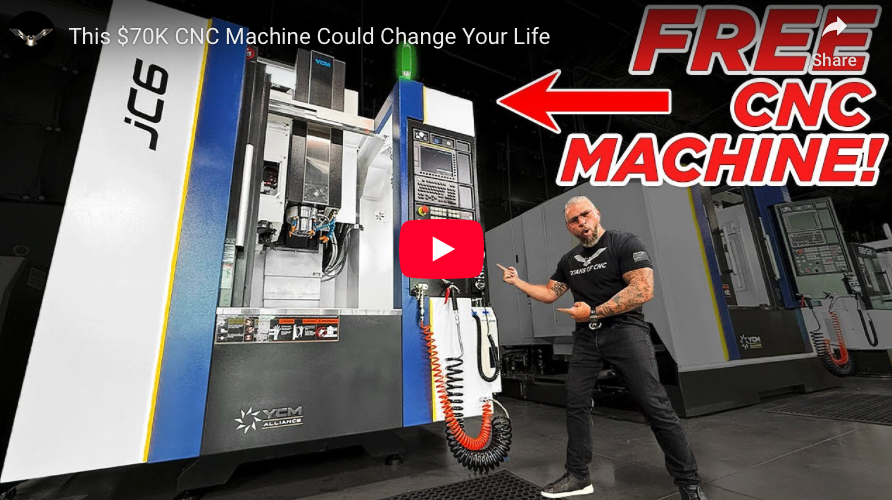
Your machines define what your shop can produce. Start with equipment that fits your niche rather than buying the most advanced machine available.
For many new shops, this means:
- One or two reliable 3-axis or 4-axis CNC mills
- A CNC lathe if turning work is part of your plan
- Machines with strong local service support
Used machines can reduce startup costs, but factor in maintenance, potential downtime, and upgrade requirements. Reliability often matters more than raw speed when you are building customer trust.
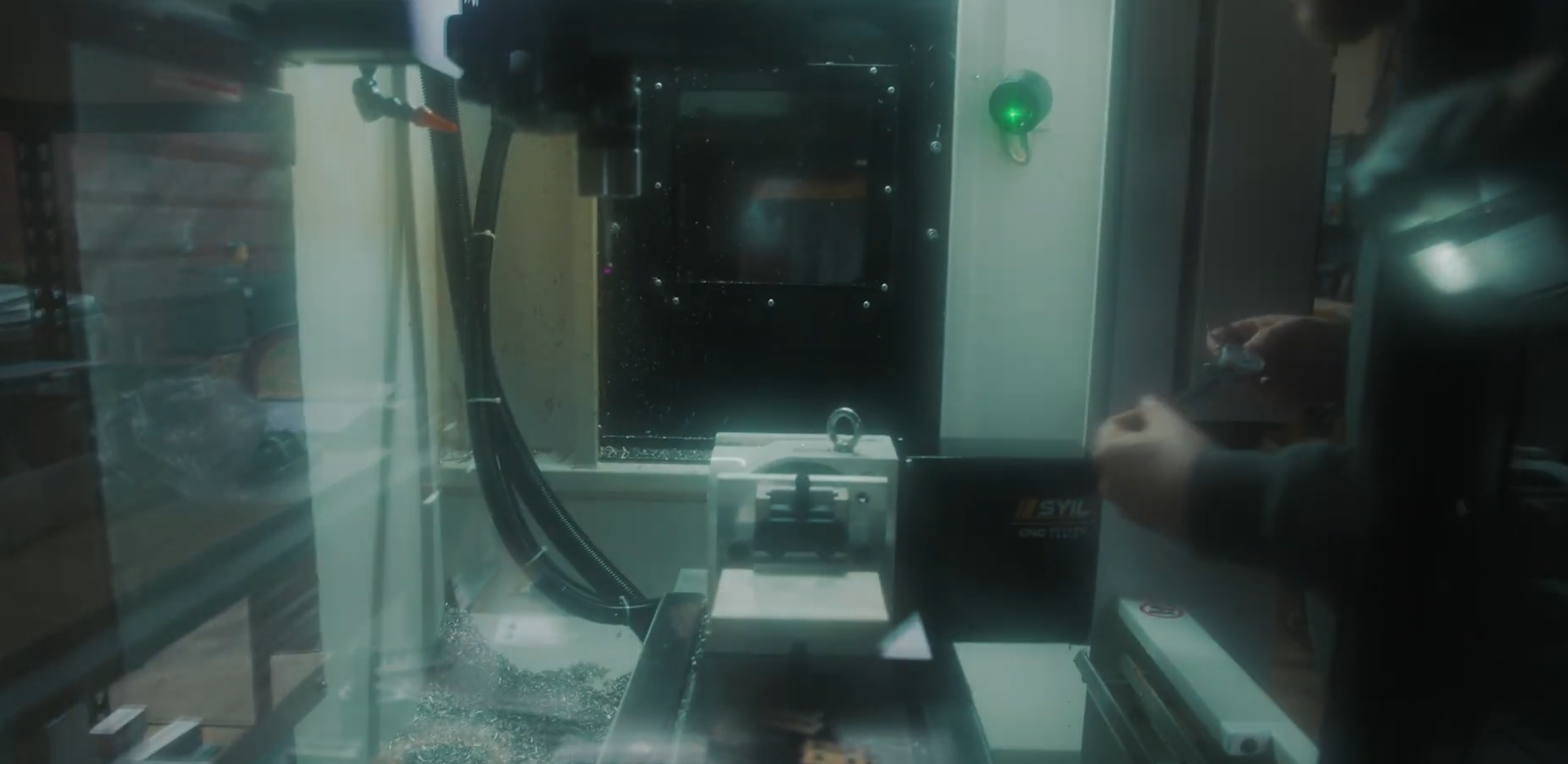
(By the way - here's our machine shop:)
Invest in tooling, inspection, and shop infrastructure
Machines alone are not enough. Tooling, workholding, and inspection equipment can represent a large portion of your budget.
Do not overlook:
- Quality cutting tools and tool holders
- Vises, fixtures, and probing systems
- Measurement tools such as calipers, micrometers, and height gauges
- Adequate power, compressed air, and coolant management
A well-organized shop layout improves safety, reduces setup time, and makes it easier to scale later.
Select CAM software that supports growth
CAM software plays a major role in how efficiently you can program parts and respond to customer demand. Early on, programming speed and consistency matter just as much as advanced features.
Modern CAM solutions can help reduce repetitive programming work, support less experienced programmers, and make it easier to take on complex parts.
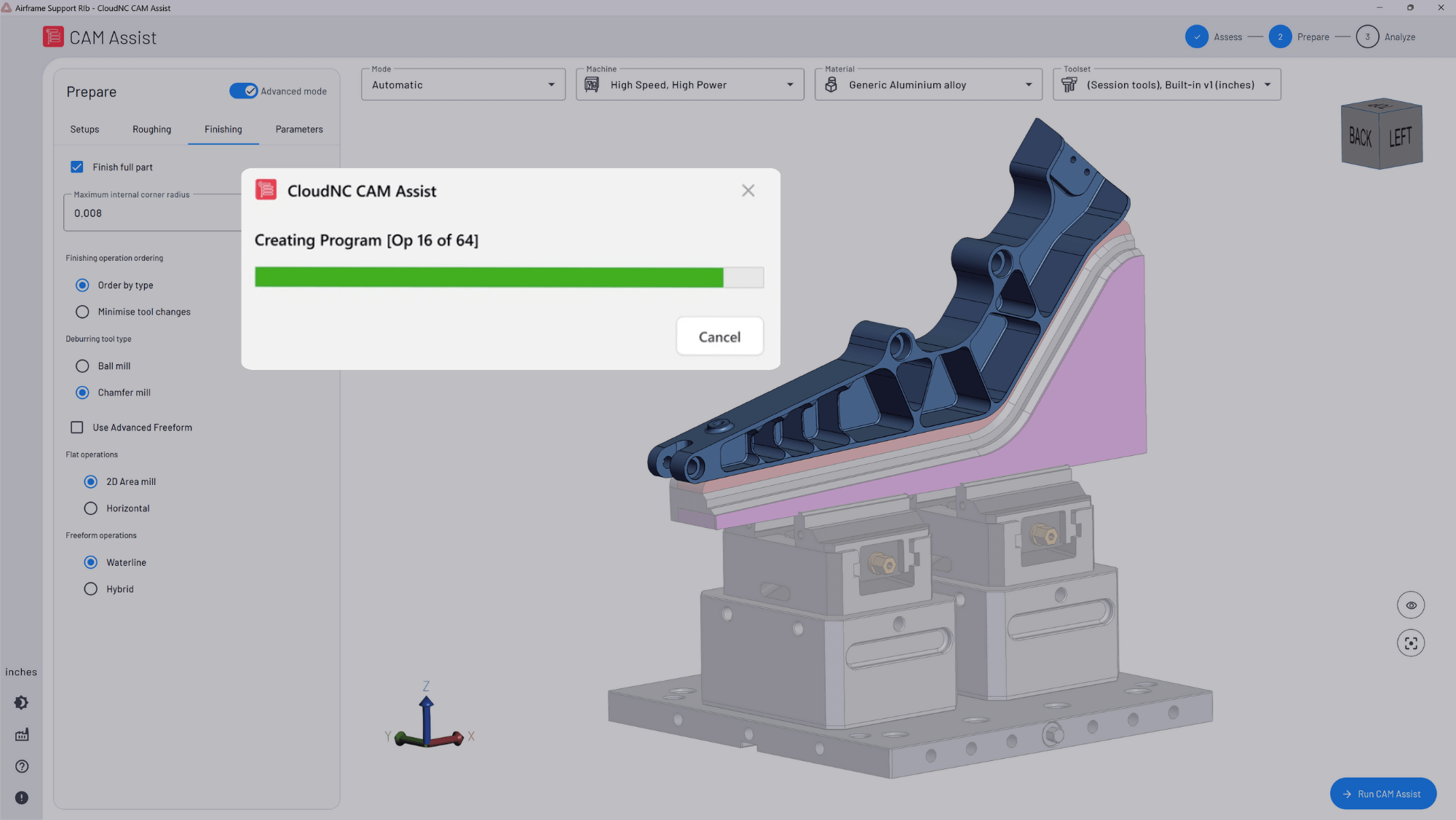
We would (of course!) recommend that you use our CAM Assist AI solution. CAM Assist works alongside your existing CAM system to generate machining strategies, toolpaths, and setups, helping shops program parts more consistently, shorten lead times, and free up experienced programmers to focus on higher-value work.
As your shop grows, having software that supports repeatable processes becomes a competitive advantage. In this video, you can see how one small shop in Huntsville, Alabama, is fast-tracking production of complex aerospace work with the help of CAM Assist.
Build your first customer base
Landing your first customers is often harder than buying your first machine. Early traction usually comes from a mix of outreach and reputation building.
- Effective approaches include:
- Leveraging existing industry contacts
- Producing CNC quotes quickly and professionally
- Creating a simple website with clear capabilities and contact details
- Registering on supplier directories and manufacturing marketplaces
- Delivering excellent communication and on-time parts
In the early stages, reliability and responsiveness can matter more to customers than having the lowest price.
Hire and train strategically
Many new shop owners start as the primary machinist, programmer, and manager. As demand increases, hiring becomes necessary.
Look for team members who are adaptable and willing to learn. Standardized programming practices and clear shop processes make it easier to bring new people up to speed.
Software tools that capture best practices can reduce dependence on a single expert and support more consistent output across the team.
Focus on quality, documentation, and repeatability
Quality issues can quickly damage a young shop’s reputation. Put basic quality systems in place early, even if formal certifications come later.
This includes:
- Documented setups and programs
- Consistent inspection routines
- Clear revision control for customer drawings and models
Repeatable processes reduce rework and make quoting and scheduling more predictable.
Plan for scaling your CNC machine shop
Growth brings new challenges. More machines, more customers, and more complexity require better systems rather than just more effort.
Think ahead about:
- How you will manage increasing programming workload
- Whether your current software supports more complex parts
- How to maintain consistency as the team grows
Shops that invest early in scalable processes and tools are better positioned to compete long term.
Final thoughts
Starting your own CNC machine shop is demanding, but it is also highly rewarding. With a clear niche, realistic financial planning, reliable equipment, and modern CAM software like CAM Assist, small shops can punch well above their weight.
By focusing on quality, repeatability, and smart use of technology, you can build a CNC machine shop that grows sustainably and delivers real value to customers.