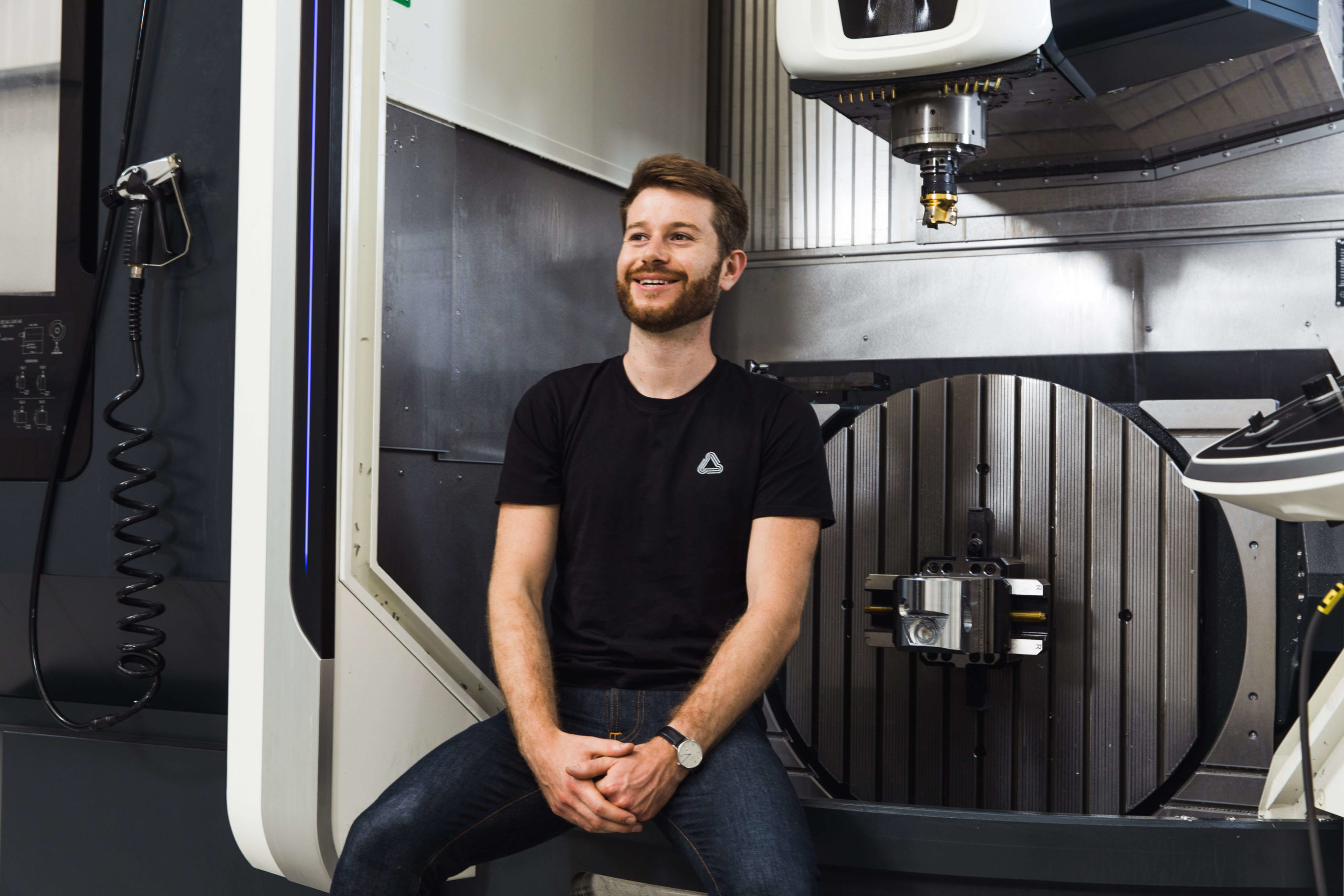
When a robot arm is calmly loading parts while the spindle keeps cutting, it is hard not to wonder what happens to the humans on the shop floor. (Although it probably doesn't look like this, at least not yet).
The honest answer is that some tasks will change fast, some will barely change at all, and the overall demand for skilled people is likely to stay strong. In many shops, robots and AI are being adopted because there are not enough experienced machinists and programmers to meet demand, not because leaders want fewer people.
This post breaks down what is really changing in CNC machining, which roles are most affected, and how tools such as robotics and AI-assisted CAM can make existing teams more effective and productive.
Why this question feels urgent right now
CNC has always evolved through technology. The difference today is speed and visibility. You can see collaborative robots (cobots) tending machines, hear about lights out production, and watch AI generate toolpaths in seconds. That can make it feel like jobs are disappearing.
But most shops are dealing with a more immediate reality:
- Customers want faster lead times and more complex parts
- There is pressure to quote competitively while protecting margin
- Work is increasingly high mix and low volume
- Experienced talent is harder to find and harder to replace
In that context, robotics and AI often show up as capacity multipliers. They help small teams produce more, with fewer late nights, fewer repetitive tasks, and fewer bottlenecks.
Robots replace repetition, not responsibility
Robots are excellent at repeatable, well-defined work. In CNC machining, that usually means:
- Loading and unloading parts (machine tending)
- Pallet and tray handling
- Simple part transfers between operations
- Basic, consistent inspection routines
- Deburring or cleaning steps that can be tightly controlled
That is a big deal because it keeps spindles running and reduces the physical strain and safety risks of repetitive handling.
What robots do not do well is the messy, variable, high judgement work that makes CNC machining valuable in the first place:
- Interpreting design intent when drawings are imperfect or ambiguous
- Choosing a realistic strategy based on tolerance, surface finish, and machine capability
- Diagnosing chatter, tool wear, and thermal drift
- Adapting setups and workholding for awkward geometries
- Managing first off approval and ongoing quality control
- Recovering when something goes wrong at 2am
Even highly automated cells still need people who understand the process end to end. The difference is where those people spend their time.
The real shift is from “doing” to “deciding”
A useful way to think about job impact is to separate tasks from outcomes.
Robots can take on the “doing” tasks that are repetitive and predictable. Humans remain essential for the “deciding” tasks:
- What is the safest and most robust way to make this part?
- Where is the risk in this setup?
- Is the toolpath acceptable for our machine, material, and fixtures?
- How do we make this process stable at scale?
In practice, this means many CNC roles shift upward, not out.
A machinist who used to spend hours tending a machine may become the person overseeing multiple machines, improving setups, checking capability, and handling exceptions. A CAM programmer may spend less time on repetitive toolpath construction and more time on process planning, simulation review, standardisation, and continuous improvement.
What AI-assisted CAM changes (and what it does not)
CAM programming is a natural target for AI because it contains patterns: pockets, profiles, drilling cycles, rest machining, finishing passes, and known strategies by material and tool type.
Modern AI-assisted CAM can help by:
- Producing toolpaths faster for common feature types
- Reducing repetitive clicks and rework
- Improving consistency across different programmers and shifts
- Helping teams respond to quotes and design changes more quickly
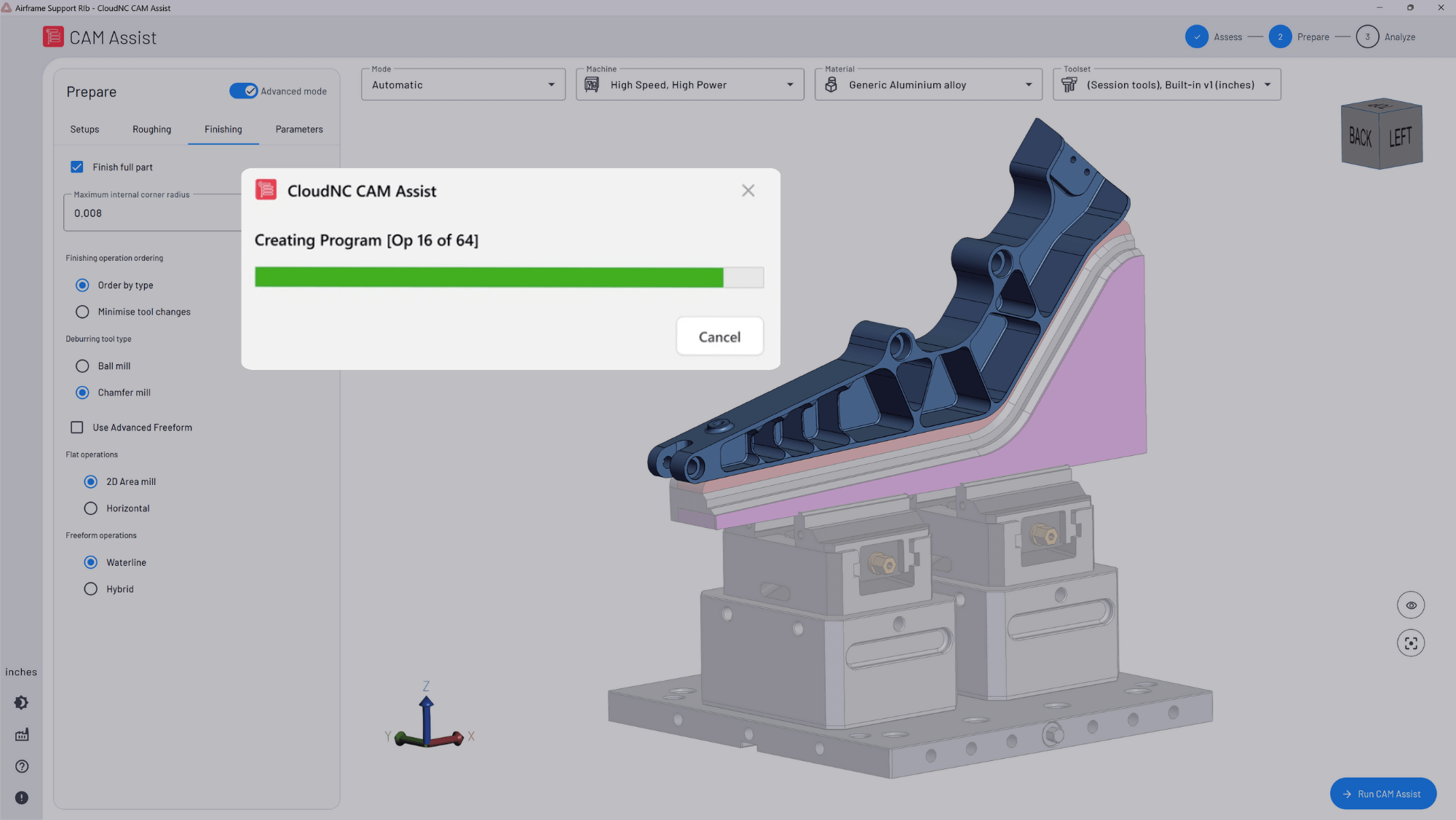
CloudNC’s CAM Assist is part of this trend. It is designed to help generate toolpaths quickly so programmers can focus on higher-value decisions such as machining strategy, tooling choices, setup approach, and final validation.
What AI-assisted CAM does not remove is accountability. Someone still needs to confirm that the plan is safe, sensible, and aligned with the real world constraints of the shop. That human-in-the-loop step is not a formality. It is where experience protects quality, machines, and delivery dates.
Robots and AI can help solve the machining skills gap
A key nuance that gets missed in “robots vs people” debates is that many shops are not choosing between humans and robots. They are choosing between:
- Missing delivery dates because capacity is constrained
- Or adding tools that help the existing team produce more
In other words, robotics and AI can be part of the solution, not the problem.
Here is what that looks like in practice:
- A robot handles loading so one machinist can supervise multiple machines
- Standardised setups reduce tribal knowledge risk when senior staff retire
- AI-assisted CAM reduces the time needed for routine programming so experienced programmers can mentor juniors, tackle the hard parts, and improve processes
- Better simulation and verification reduces scrap and crashes, which protects both people and profitability
When you hear “productivity” in this context, it often means “we can finally keep up with demand with the team we have” rather than “we want to remove roles”.
Which CNC roles change the most?
The impact is not uniform. It depends heavily on the type of work.
- High volume, stable production
If you are in a high volume environment with consistent parts and long runs, robots and integrated cells make a lot of sense. Machine tending and routine handling tasks are the most likely to be reduced.
But even there, the roles do not disappear so much as shift:
- Cell technicians
- Process engineers
- Maintenance and reliability specialists
- Quality and metrology technicians
- Tooling and fixturing experts
- High mix, low volume and complex parts
In job shops and complex manufacturing (aerospace, medical, energy, precision engineering), variability is the rule. Parts change, priorities change, and customer requirements change. That creates constant exceptions and decision points.
These environments benefit from robotics and AI too, but usually in a more targeted way. The strongest job security tends to sit with people who can handle complexity: multi-axis work, difficult materials, tight tolerances, and problem solving under time pressure.
Why “lights out machining” is harder than it sounds
Fully unattended production is possible in some cases, but it is rarely as simple as adding a robot.
To run reliably without people, you need:
- Ultra-stable processes and repeatable incoming material
- Robust workholding, probing, and tool monitoring
- Predictable chip control and coolant management
- Clear rules for what happens when something deviates
- A plan for inspection, traceability, and non-conformance
Many shops adopt a pragmatic middle ground: a few hours of unattended running, or extending production into evenings, rather than aiming for zero humans.
That middle ground still creates value. It increases throughput without pretending that real manufacturing has no surprises.
How to future-proof your CNC career
If you are worried about robots taking your job in CNC, focus on moving up the stack from repetition to expertise.
Skills that are becoming more valuable include:
- Multi-axis programming and machine kinematics awareness
- Workholding and fixture design thinking
- Tool selection, feeds and speeds judgement, and material behaviour
- In-process measurement, probing, and metrology fundamentals
- Simulation review and risk spotting
- Root cause problem solving when quality drifts
- Communicating with design, quality, and production teams
One practical mindset shift helps: aim to become the person who can make a process stable, not just the person who can run a process.
Will robots take my job in CNC?
Robots will take over more repetitive tasks in CNC. AI will carry out some of the repetitive effort in CAM. That is real, and it is happening.
But for most shops, that shift is less about replacing people and more about amplifying what skilled people can accomplish. With a global shortage of experienced machinists and programmers, the most common business problem is not “too many workers”. It is “not enough capacity and not enough skilled time”.
Robots and AI are increasingly being used to protect and extend the value of human expertise.
If you build skills in setup strategy, machining judgement, verification, and problem solving, you are not competing with robots. You are becoming the person who makes the whole system work.
Final thoughts
CNC machining is becoming more digital and more connected, but it is not becoming less human.
The future looks like teams where robots handle the predictable work, AI -ssisted tools accelerate routine programming, and people focus on decisions that keep quality high and production stable.
Robots are not the end of CNC careers. In many cases, they are the support structure that helps CNC teams keep up with demand, overcome skills shortages, and do better work with less burnout.