Quoting: everyone hates it.
I’ve spent a few years running CloudNC’s factory in Chelmsford, and I understand why. We lost work because we couldn’t get quotes back quickly enough. We also learnt the hard way what happens when you win work at the wrong price.
More specifically: when I took over the machine shop, I inherited a massive 2-year fixed contract job for a major manufacturer worth $2m of revenue… but we had misquoted the work. It turned out to be a poor fit for the factory, cost us hundreds of thousands, and created problems for everyone involved.
Once you have committed to taking on that job, the consequences of a bad estimate follow it through the factory; indeed, we are only just winding down the contract now, and while it filled our machines with activity, it really didn’t help us in the long-term.
Those experiences are a big part of why we built Quote Agent.
A machine shop can spend hours working out how to make a part that a customer might potentially like them to make, and watch the work go elsewhere. When that happens repeatedly, the cost lands on the people the business can least afford to tie up: its most experienced estimators, programmers and engineers.
That’s a frustrating use of scarce expertise. You can have good machines, capable people and customers who need parts, yet still struggle to turn enquiries into work because the right person doesn’t have time to price them.
Anyone who has looked properly at a manufacturing quote knows how much effort sits behind the price. The estimator has to work out how the part could be made and what might make it expensive or difficult. They are making decisions about production, way before there is an order to produce anything.
As a result, quoting becomes a bottleneck: the people best placed to assess the next job are often needed to solve a problem on the one already running. More enquiries mean more pressure on exactly the same small group of people.
With approximately 90% of quotes lost, shops are committing a lot of their expertise to work they will never make. This is insane. The hours spent preparing an unsuccessful quote are hours someone could have spent improving a process, helping a colleague or getting paid work done.
There is a temptation to solve this by quoting faster and worrying about the details later. Our experience taught me how expensive that can be. A full order book is a poor result if it is full of jobs priced on assumptions that fall apart in production. An underpriced job commits cash and capacity to work that returns too little. By the time the part reaches a machine, many of the decisions that determine its profitability have already been made.
That is why I care about the quality of the assessment behind a quote as much as the speed of the reply. A good estimator needs time to challenge the manufacturing plan and judge whether the job makes sense for the shop.
I want software to give them more of that time. Now, we have it.
Quote Agent: giving estimators time back
The factory gave us direct experience of the problem. Alongside that, CloudNC has spent a decade developing physics models that understand parts and how they can be manufactured. We wanted to apply that knowledge earlier, while a shop is deciding whether to take on a part and still has time to question the assumptions behind the price.
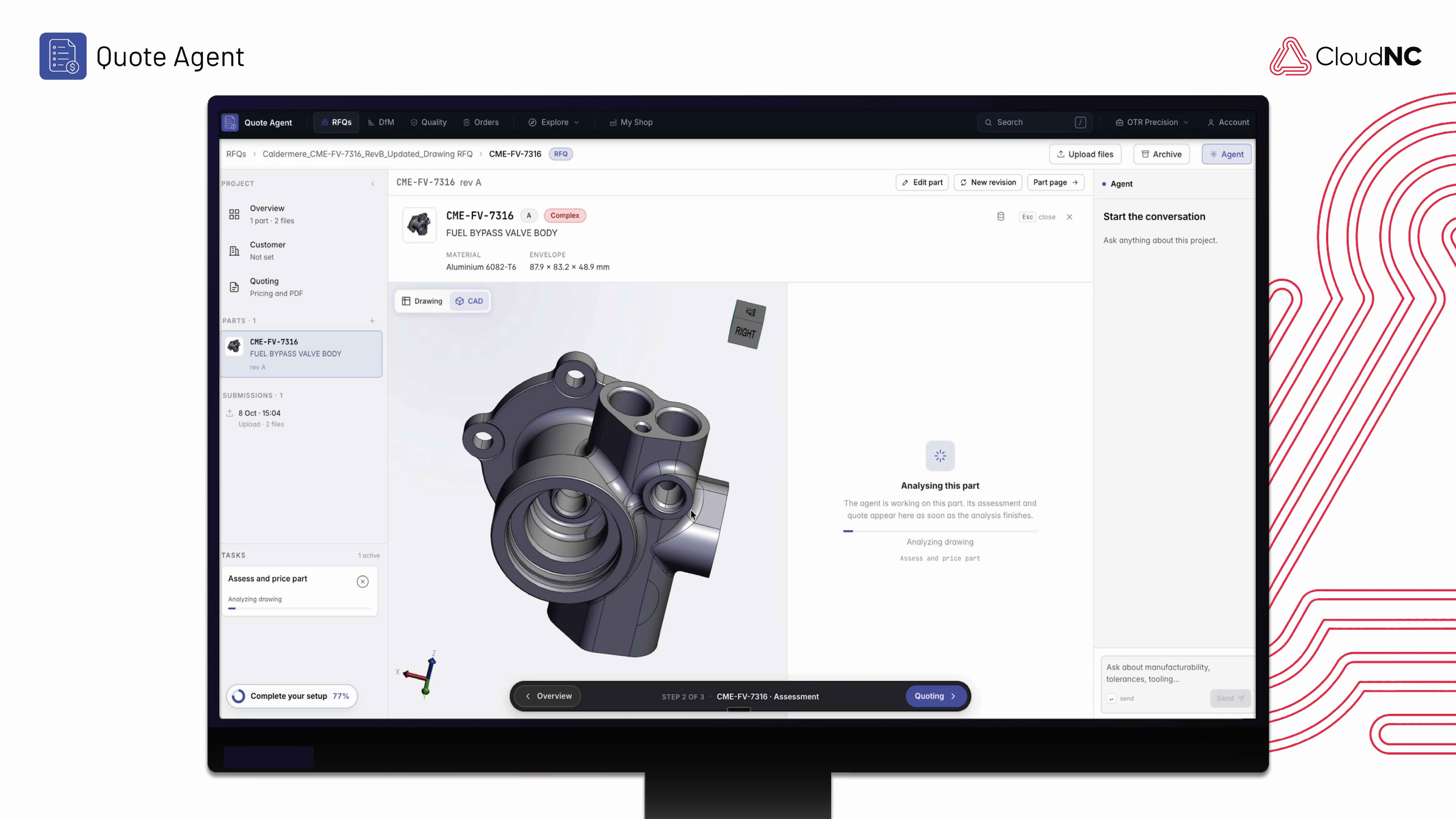
Our new Quote Agent solution combines those models with AI to prepare the work behind the quote. You forward a customer’s request for quote (RFQ), and/or upload the drawings and models. The agent assesses manufacturing risks and proposes a manufacturing plan, routing times, material and post-processing cost estimates, and inspection requirements. The estimator has something to examine and adjust within minutes.
The shop’s own circumstances matter here. Through Myshop, users can add their equipment, capabilities, costs and preferences. They can replace the agent’s starting cost estimates with their suppliers’ prices. A useful estimate has to reflect the business that will actually make the part.
I would be wary of any system that asked an estimator to accept a price without understanding how it was reached. In Quote Agent, the user reviews the proposed plan and costs, decides whether to quote and sets the final price. If information is missing or unclear, the agent asks questions so the user can resolve it. The person sending the quote remains responsible for it.
That review is where experience earns its keep. An estimator might know that a particular setup will be awkward on their machines, or that an outside supplier’s lead time needs checking before the shop commits. They should be able to apply that knowledge to a prepared estimate, without first spending hours assembling it.
We have also made the complete manual quoting workflow free, with unlimited users and usage. It gives shops quoting tools they would typically pay for. The AI agent is free to try as well. I think manufacturers should be able to test this on their own work and see the value, before paying for agent usage.
The feedback from our early users has been incredibly positive (see the video above!), and I’m very confident that you will find value in Quote Agent very quickly. My suggestion to you is to try Quote Agent on a job you know. Compare the proposed route and costs with your own estimate. Challenge the assumptions. See how much preparation time it saves and where your judgement makes a difference.
Running one factory gave me a very clear view of this problem. With Quote Agent, I want to help machine shops around the world solve it: giving their estimators more time to choose the right work, price it properly and respond before the opportunity has gone.